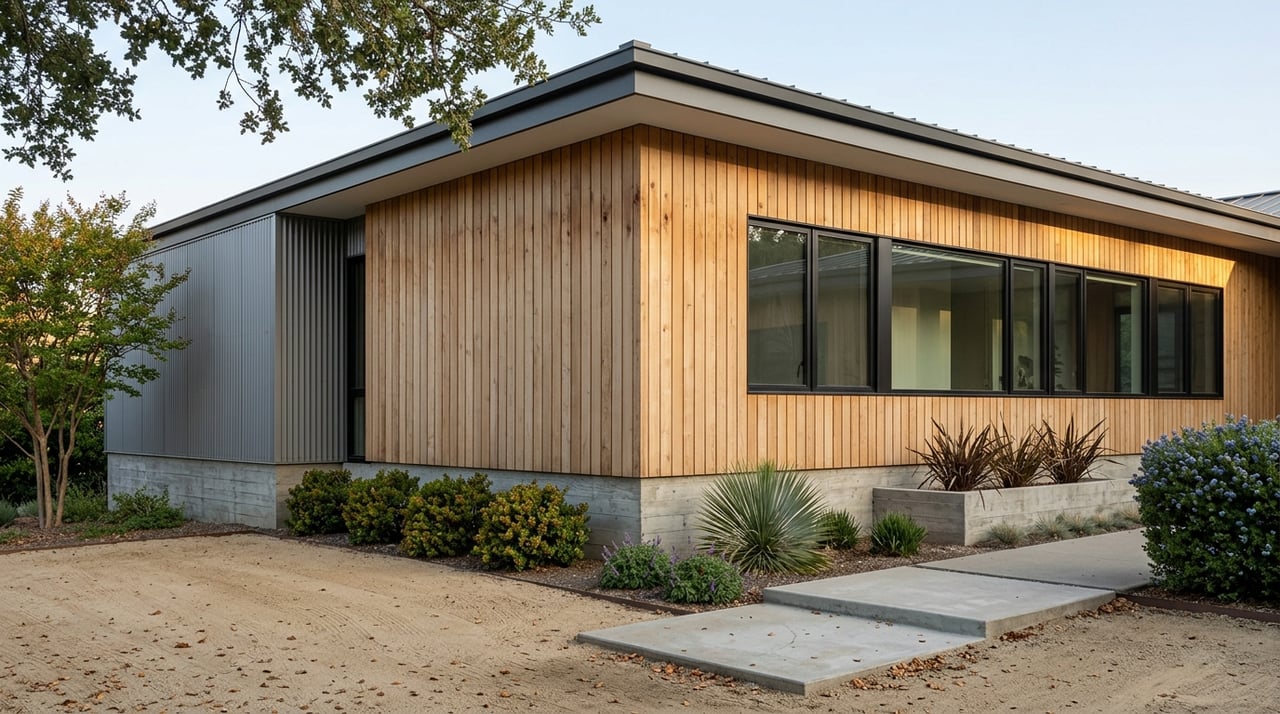
A Smart Orinda Downs Home Pricing Strategy for Sellers
April 9, 2026
April 9, 2026
If you price your Orinda Downs home too high, you may lose the buyers who matter most in the first few weeks. If you price it too low, you risk leaving money on the table. In a small neighborhood where each property can vary widely by lot, layout, privacy, and finish level, smart pricing is less about guesswork and more about precision. Here’s how you can think about pricing your Orinda Downs home with the market, the comps, and buyer behavior in mind. Let’s dive in.
Orinda Downs is a small pocket within Orinda, not a large market with dozens of identical homes. Redfin’s neighborhood snapshot notes a population of about 338 and describes the area as largely car-dependent, which means buyers are often evaluating the home itself more than walk-to-retail convenience.
That matters when you set a list price. In Orinda Downs, buyers tend to pay for lot utility, privacy, views, floor plan livability, and remodel quality. A generic citywide average can give you context, but it should not drive your pricing on its own.
The larger Orinda detached-home market still points to a relatively tight seller environment. According to Bay East’s February 2026 Orinda detached report, there were 20 active listings, about 1.4 months of inventory, a median sale price of $2.4 million, average price per square foot of $857, average days on market of 23, and homes selling for 100% of list price on average.
A separate Realtor.com 94563 market snapshot shows somewhat different numbers because it uses a different sample and time window, but the takeaway is similar: pricing discipline still matters. Bay East’s 2025 year-in-review also noted more listings, more time on market, and a bit more leverage for buyers, even as detached-home prices finished slightly above 2024.
For you as a seller, that means the market may support a strong price, but it may not forgive an inflated opening number. Your launch price should attract conviction early.
The smartest pricing strategy begins with the most similar recent sales in Orinda Downs. That means looking first at homes that closely match your property in:
Recent neighborhood sales show just how wide the pricing range can be. 18 Van Tassel Ln sold for $1.85 million, while 42 Tappan Ln sold for $5.3625 million. In between, 475 Dalewood Dr, 348 Dalewood Dr, 147 Amber Valley Dr, and 133 Lombardy Ln all landed at meaningfully different price points.
That is why your first question should not be, “What’s the average price in Orinda?” It should be, “Which three to five recent sales are the closest match to my home?”
It is tempting to use a simple price-per-square-foot formula, but in Orinda Downs that can be misleading. Based on the recent sales in the research set, the observed price-per-square-foot range runs from about $662 per square foot at 42 Tappan Ln to about $1,082 per square foot at 133 Lombardy Ln.
The simple average from those comps is about $847 per square foot, and the median is about $807 per square foot. Those figures are useful as a checkpoint, but not as your final answer. A larger home does not always command a higher price per square foot, and a smaller but beautifully updated home on a strong lot can outperform a bigger property.
One of the clearest lessons from recent Orinda Downs sales is that scale alone does not drive value. The 8,096-square-foot sale at 42 Tappan Ln traded around $662 per square foot, while the 3,112-square-foot sale at 133 Lombardy Ln traded around $1,082 per square foot.
That spread tells you something important. Buyers are not pricing homes like a warehouse. They are reacting to how the home lives, how it shows, and whether the lot and finish level feel worth the premium.
In Orinda Downs, certain features appear to create real pricing separation. Based on recent sales and listings, buyers seem to place visible value on:
For example, 564 Dalewood Dr was described as a country-villa home on 1.1 acres with a pool, spa, water slide, patios, lawn, and garden. The same source also highlights how homes with standout amenities, strong outdoor living, and a compelling architectural identity can attract premium attention.
If your home has these features, they may support a higher position within the comp range. If it lacks them, your price should likely reflect that honestly from day one.
Once you identify the closest sold comps, the next step is adjustment. This is where thoughtful pricing can outperform a broad average.
You might adjust upward if your home offers a meaningfully better lot, a more current remodel, stronger privacy, better views, or a highly usable indoor-outdoor setup. You might adjust downward if your home has a dated kitchen or baths, a less efficient floor plan, deferred maintenance, or a location that feels less private or less usable.
A practical way to think about it is this: your list price should sit within reach of the most relevant comp evidence, not far outside it. If you need too many “perfect buyer” assumptions to justify your number, the market may push back quickly.
In a neighborhood with limited inventory, it can be tempting to test a bold number. But the first list price is more than a marketing detail. It is your first test of buyer conviction.
Bay East’s February 2026 report shows Orinda detached homes selling at 100% of list price on average, which sounds strong. But that does not mean buyers will ignore a price that is out of line with the best comp set. It means well-priced homes are still finding traction.
If you launch too high and need a reduction, buyers may start to wonder what they are missing. In many cases, pricing accurately at the start creates stronger early demand and a cleaner path to a near-list result.
If you are preparing to sell in Orinda Downs, this is a practical framework to use:
Prioritize recent Orinda Downs sales that are most similar to your home in size, lot, condition, and overall appeal. Avoid relying on distant comps unless there are very few relevant neighborhood matches.
Look carefully at what separates the higher-performing sales from the rest. Pools, privacy, updated design, and lot quality may matter more here than a simple bedroom count.
Use the local range and average as a guide, not a formula. Your home should be anchored to the closest match, then adjusted based on real differences.
Ask whether your list price still makes sense if buyers compare your home side by side with the best recent alternatives. If your answer depends on hope rather than evidence, the price may be too aggressive.
In a market where well-priced homes can still move in a few weeks, your first days on the market matter. A price that creates immediate interest can put you in a stronger negotiating position than one that sits.
Smart pricing in Orinda Downs is about fit, not formulas. The neighborhood’s small size, varied housing stock, and wide comp range make it especially important to focus on the closest sold properties and the features buyers clearly reward.
If you are thinking about selling, the goal is not to pick the highest possible number. It is to choose a price that reflects your home’s real position in the market and gives you the best chance to attract serious buyers early. For tailored guidance on your home, a local pricing strategy, and a full-service listing plan, connect with Alexis Thompson.
Stay up to date on the latest real estate trends.

Etiam non quam lacus suspendisse faucibus interdum. Orci ac auctor augue mauris augue neque. Bibendum at varius vel pharetra. Viverra orci sagittis eu volutpat.