
Why Almost No One in Happy Valley Can Actually Use California's New Ten-Home Subdivision Law
September 24, 2026
September 24, 2026
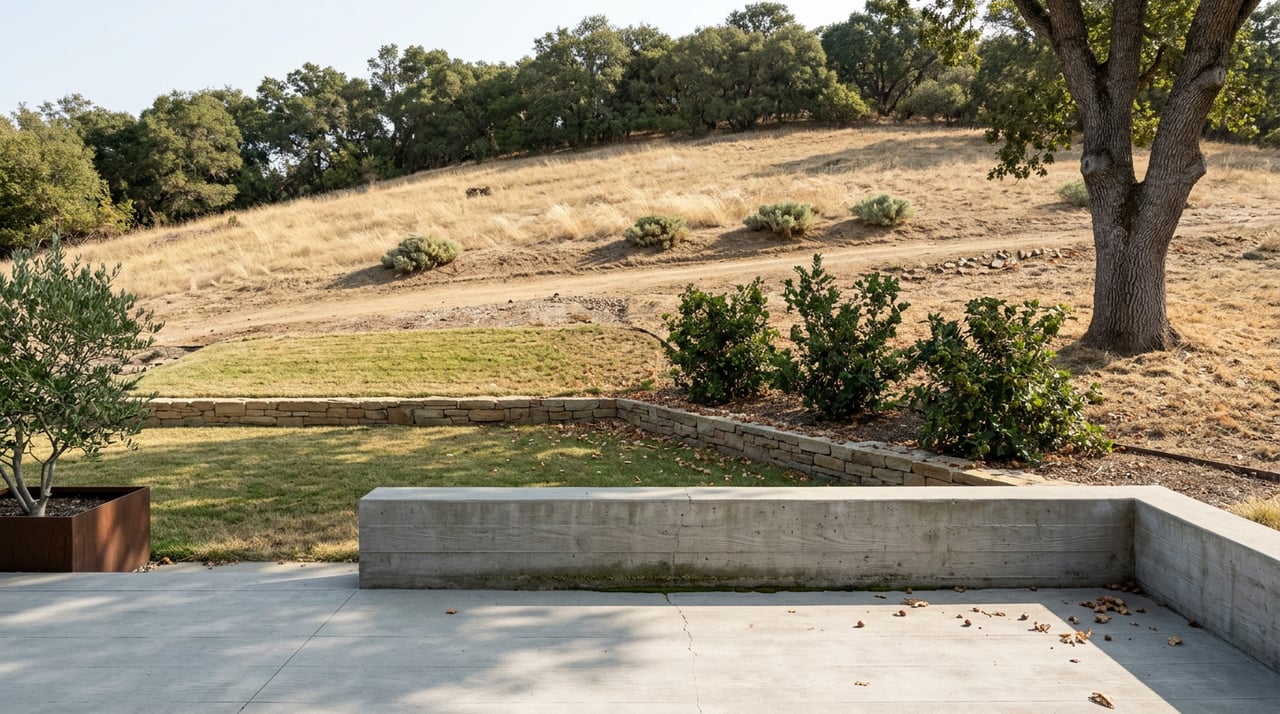
I came across a listing in Happy Valley not long ago that mentioned something I hadn't seen attached to a property in this neighborhood before. The description pointed straight at SB 1123, the state law that lets an owner split a single parcel into as many as ten, and described a down-slope lot with utilities already at the street.
That listing is not a preview of what's coming for the rest of Happy Valley.
SB 1123 took effect on July 1, 2025, and it lets a landowner split a single-family-zoned lot into up to ten new parcels through a streamlined, ministerial process. No public hearing, no CEQA review, and a 60-day clock the local agency has to meet or the application is deemed approved. On paper, that sounds like it applies to any large lot in a neighborhood like this one.
It doesn't. The law only reaches lots that are vacant, and the statute defines that narrowly: no permanent structure on the property, unless that structure is abandoned and uninhabitable, and nothing on the site has been occupied by a tenant within the past five years. Most lots in Happy Valley don't come close. This is a neighborhood built around large lots with large, occupied homes already on them, homes in the Acalanes school district, homes bordering Briones Regional Park, homes that have been lived in for decades. A lot with a house on it is not a candidate for SB 1123, no matter how many acres come with it.
The clearest evidence of how narrow this is didn't come from a law firm's summary. It came from a city government doing the math.
In neighboring Orinda, whose city limits share the Happy Valley Road corridor, the Planning Commission spent part of its May 12, 2026 meeting reviewing exactly how many parcels in the city could realistically use SB 1123. Staff reported that many of the parcels identified in the city's housing element already exceed the law's 1.5-acre size cap, and that once you exclude lots in very-high fire hazard severity zones, roughly 50 parcels citywide could qualify in principle. In practice, the city had received exactly one active SB 1123 application and two prior inquiries over the preceding six months. The commission voted unanimously to recommend that City Council adopt an ordinance restricting how the law gets used locally, including a ban on accessory dwelling units on any lots created through it.
Fifty eligible parcels out of an entire city, and one application. That's not a flood of ten-unit developments reshaping the hills. That's a law with a narrow doorway, and Orinda's Planning Commission has recommended local restrictions on its use.
Happy Valley Road itself crosses between the two cities. Addresses toward one end carry Lafayette's 94549 zip code, while addresses toward the other carry Orinda's 94563, so which city's planning department has authority over a given parcel depends on exactly where it sits. Both cities are working through the same state law with the same size cap and the same vacancy test, and Orinda's own numbers give a useful preview of how tightly it plays out on the ground.
If SB 1123 doesn't reach an improved lot, that doesn't mean state law has nothing to say about it. It means a different, older law applies instead, and the two get confused constantly because they sound similar.
| SB 9 (2021) | SB 1123 (2025) | |
|---|---|---|
| Lot condition required | Can apply to a lot with an existing home | Lot must be vacant |
| Maximum resulting units | Up to two units per resulting parcel | Up to ten units total across the subdivision |
| Owner-occupancy | Required for a period after the split | Not required |
| Review process | Ministerial, limited local discretion | Ministerial, no CEQA, 60-day clock |
For the typical Happy Valley property, with an existing home on a large lot, SB 9 is the relevant tool, not SB 1123. SB 9 tops out at two units and comes with an owner-occupancy condition that SB 1123 doesn't carry. That's a very different set of numbers than the ten-unit headline attached to the newer law, and it's the gap that matters most when someone starts pricing a property based on assumed development rights.
If you own a large parcel in Happy Valley and you're weighing whether to mention subdivision potential in your listing, the vacancy test comes first. A structure that's currently occupied, or that's been rented within the last five years, takes SB 1123 off the table regardless of acreage. That doesn't close every door. It just means the door you're likely walking through is SB 9's, with its two-unit ceiling and occupancy requirement, and pricing a property as though a ten-unit ministerial approval is sitting there waiting for a buyer sets an expectation the parcel probably can't meet.
Before advertising any specific unit count, it's worth getting a written determination from Lafayette or Orinda planning staff, whichever jurisdiction the parcel falls under. Fire hazard severity zone mapping and the 1.5-acre cap both narrow eligibility further, and those boundaries aren't always obvious from a plat map alone.
The reverse matters just as much. If a listing anywhere in Happy Valley references development potential under the new law, the first question is simple: is the lot genuinely vacant under the statute's definition, or is there a habitable structure on it right now? The second is whether anything on the site has been tenant-occupied in the past five years, since that alone disqualifies SB 1123 use. The third is whether the parcel sits inside a very-high fire hazard zone, the same category Orinda's planners flagged as a hard limit when they ran their own count.
A parcel that fails any of those three tests isn't ineligible for state housing law altogether. It's just working under SB 9's much smaller math instead of SB 1123's, and that difference should show up in what you're willing to pay for "potential" rather than for the house that's actually there.
If I tear down my existing house, does my lot become eligible for SB 1123? The statute's definition of vacant turns on whether a permanent structure exists at the time of application, so a genuinely cleared lot could meet that test. Demolition is a significant cost and timeline commitment on its own, and the lot would still need to meet the 1.5-acre cap and the "substantially surrounded by urban uses" standard before a ministerial application could move forward.
Can I add an ADU to a lot created under SB 1123? The law allows a local agency to permit accessory units on new parcels without counting them toward the ten-unit maximum, but it doesn't require the city to allow it. Orinda's Planning Commission specifically recommended barring ADUs on lots created this way as part of its proposed local ordinance.
Does this apply the same way everywhere in Happy Valley? Not necessarily. Depending on where a parcel sits, it may fall under Lafayette's zoning authority or Orinda's, and each city is working through its own implementation of the same state law. A parcel-specific check with the relevant planning department is the only way to know for certain.
If you're weighing whether a large Happy Valley lot is priced for what it actually is, rather than for what a headline about the new law implies it could become, that's exactly the kind of question worth running past someone who tracks this market closely. Alexis Thompson offers a free home valuation that accounts for what a property can actually support under current zoning, not just what the acreage suggests on paper.
This article is general information, not legal, tax or financial advice. Consult a qualified professional about your situation.
Stay up to date on the latest real estate trends.
Etiam non quam lacus suspendisse faucibus interdum. Orci ac auctor augue mauris augue neque. Bibendum at varius vel pharetra. Viverra orci sagittis eu volutpat.